
The Bridges of Paris: 37 Crossings Worth Knowing
Paris is divided into two halves by the Seine River, and the city has spent centuries building its way across it. Today, 37 bridges connect the Right Bank to the Left Bank, each with its own character. Knowing which ones to use — and when — makes a real difference to how you experience the city on foot.
The Pont Neuf is the oldest, completed in 1607, and sits at the western tip of the Île de la Cité. Despite its name meaning “New Bridge,” it has outlasted dozens of others and remains one of the most practical crossings in the center of Paris. From here, you get clean sightlines up and down the river and easy access to both banks.
For a more scenic walk, the Pont des Arts connects the 6th arrondissement to the Louvre area and offers a pedestrian-only experience. It used to be famous for love locks before the city removed them in 2015 for structural reasons, but the views remain excellent. The Pont de l’Alma is worth knowing for practical reasons — it sits near the Eiffel Tower and is a key reference point for river boat departures.
If you are staying in the Marais or heading toward Notre-Dame, the Pont Saint-Louis connects the Île Saint-Louis to the Île de la Cité. It is short, often busy with street musicians, and gives you a pleasant moment between two of Paris’s most charming islands. For a quieter crossing further east, the Pont de Sully is a solid choice that puts you near the Jardin des Plantes.
A practical tip: Google Maps and the RATP app both show real-time transit options, but for walking routes across the Seine, the bridges are always faster than waiting for public transport during peak hours. Plan your crossings based on which arrondissements you are moving between, and you will save time consistently.
Taking a Boat Across the Seine: The Batobus and River Cruises
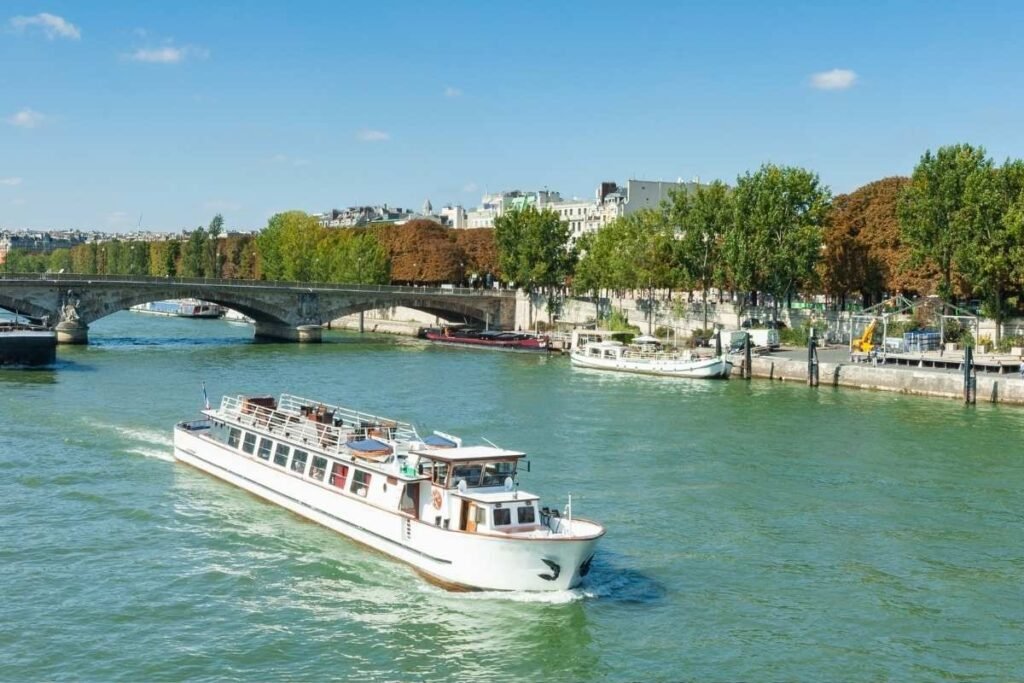
Walking across a bridge is the most common way to cross the Seine, but it is not the only one. The Batobus is Paris’s river bus service, running between several key stops including the Eiffel Tower, Musée d’Orsay, Saint-Germain-des-Prés, Notre-Dame, and the Louvre. A day pass in 2026 costs around 23 euros for adults, and the boats run roughly every 20 to 25 minutes depending on the season. It is a genuinely useful way to move between major sites without dealing with the Métro, and the open-air decks give you a completely different perspective on the city.
Beyond the Batobus, river cruises offer something more memorable than just getting from one bank to the other. A Paris Seine River sightseeing guided cruise covers over six iconic monuments in 60 minutes, with live commentary in both English and French. It is one of the most efficient ways to orient yourself when you first arrive in Paris, especially if you are short on time.
For an evening on the water, a dinner cruise on the Seine River turns a simple crossing into a full experience — food, wine, and landmark views all in one sitting. Those looking for something more exclusive might consider a private Seine River cruise with champagne, which gives you the whole boat and a more personal itinerary.
One practical note: river boat services are seasonal, and schedules shift between winter and summer. Always check departure times in advance, as the Batobus typically suspends or reduces service between November and February. Most cruise operators run year-round, but evening departures can fill up quickly on weekends, so booking ahead is the smarter move.